

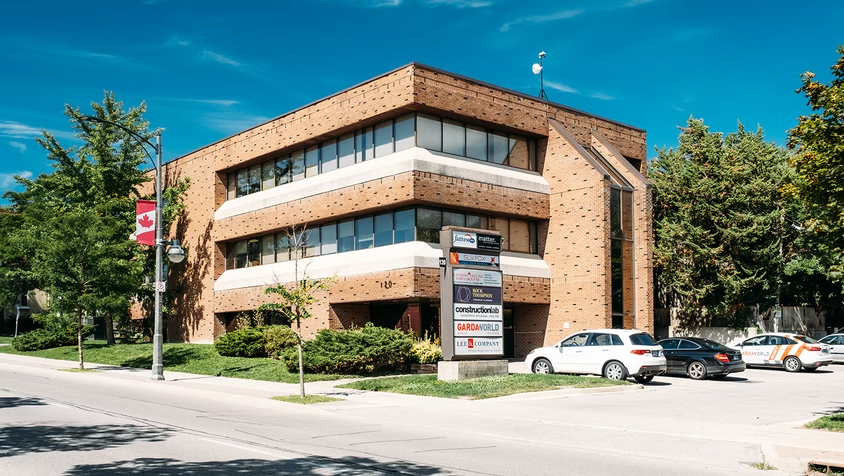
For a not for profit organization, finding the right office space is about more than just securing a physical location; it’s about establishing a hub for your mission. Your office is where your team collaborates, where volunteers are trained, and where the community you serve can connect with your work. The search for this crucial space comes with its own unique set of challenges, as budget constraints, operational needs, and the desire for an accessible location must all be carefully balanced.
Making the right real estate decision can amplify your organization’s impact, while the wrong one can drain precious resources and hinder your ability to achieve your goals. For leaders in the not for profit sector, navigating the commercial real estate market requires a strategic approach that prioritizes both financial stewardship and mission alignment. This guide offers practical advice to help you find an office space that empowers your organization to thrive.
Understanding Your Organization’s Unique Needs
Before you begin your search, it is essential to look inward and define what your organization truly needs from a workspace. Unlike a for-profit business, a not for profit must consider a wider range of stakeholders, including staff, volunteers, clients, and donors. A thorough needs analysis will create a clear roadmap for your search. Think about the size and layout required to support your daily operations. This includes not just workstations for your staff but also potential needs for confidential client meeting rooms, larger spaces for volunteer training sessions, or secure storage for program materials.
Consider your organizational culture and how the physical environment can support it. Do you need collaborative, open areas to foster teamwork, or do you require quiet, private spaces for focused work and sensitive conversations? Also, evaluate your technical infrastructure needs, such as reliable internet access for digital outreach and donor management systems. Forecasting your growth over the next three to five years will help ensure you choose a space that can adapt as your organization evolves, preventing the disruption of a premature move.
Creating a Mission-Aligned Budget
Financial stewardship is at the core of every not for profit organization. Every dollar spent on overhead is a dollar not spent directly on your programs, so creating a comprehensive and realistic budget is a critical first step. The cost of an office extends far beyond the monthly base rent. You must account for additional rent, often called TMI (Taxes, Maintenance, and Insurance), which can add a substantial amount to your monthly payments. It is crucial to get a clear estimate of these costs for any property you consider.
Your budget should also include line items for utilities like hydro, heating, and internet. Don’t forget the one-time expenses associated with a move, such as a security deposit, furniture, IT setup, and potential renovation costs. Exploring all potential avenues for cost savings, such as grants for operational support or partnerships with other organizations, can help make your budget go further. A detailed budget ensures your real estate decision is financially sustainable and allows you to continue dedicating maximum resources to your mission.

Selecting a Strategic and Accessible Location
The location of your office has a profound impact on your organization’s ability to serve its community effectively. For a not for profit, accessibility is a multi-faceted consideration. First, think about the clients and community members you serve. Your office should be located in an area that is easy for them to reach, ideally close to public transit routes. This ensures that those who rely on your services can access them without unnecessary barriers. An accessible location sends a powerful message that your organization is inclusive and community-focused.
Equally important is the commute for your staff and volunteers. A central, easily accessible office can be a key factor in attracting and retaining dedicated team members who are the lifeblood of your organization. Consider the availability of parking and the safety of the surrounding neighbourhood. The right location should also align with your organization’s identity and mission, placing you in a community where you can build strong local partnerships and be a visible, positive presence.
Navigating the Lease Agreement
A commercial lease is a significant legal and financial commitment. For a not for profit, it is vital to negotiate terms that provide both stability and flexibility. The lease document is often complex and written to favour the landlord, so it is highly advisable to have it reviewed by a commercial real estate professional and a lawyer who understands the specific needs of non-profit organizations. Pay close attention to the lease term, or the length of the agreement. A shorter term may offer flexibility, but a longer term could secure a more favorable rate.
Key clauses to scrutinize include renewal options, which give you the right to extend your stay, and subletting clauses, which can provide an exit strategy if your space needs change. Understand the rules around making alterations to the space and inquire about a Tenant Improvement Allowance (TIA) to help cover renovation costs. You may also be able to negotiate clauses that are specific to a not for profit, such as terms related to grant-based funding cycles or the ability to display donor recognition.
Partnering with a Commercial Real Estate Expert
Navigating the complexities of the commercial real estate market while running a not for profit can be an overwhelming task. Partnering with a commercial real estate agent who specializes in working with non-profit organizations can be a game-changer. These professionals understand the unique financial constraints and operational needs of the sector. They can provide invaluable assistance by identifying suitable properties, including those that may not be publicly listed, and offering insights into market trends.
An experienced agent acts as your advocate during negotiations, working to secure the most favourable lease terms possible. They can help you understand the true costs of a lease, manage communications with landlords, and guide you through the extensive paperwork. This expert support frees you up to focus on what you do best: leading your organization and advancing its mission, confident that your real estate strategy is in capable hands.
Your office is more than just a building; it’s a vital tool for fulfilling your mission. By taking a strategic and informed approach to the selection process, you can find a space that supports your team, welcomes your community, and enhances your organization’s impact for years to come.
At The Focal Point Group, we have a deep respect for the work done by organizations in the non-profit sector. We understand the unique challenges you face and are committed to helping you find the ideal space. Our team has extensive experience working with the not for profit business community and can provide the expert guidance you need.
Ready to find the perfect home for your organization? Contact us today to learn how we can support your mission.
